
Sleeping on a futon
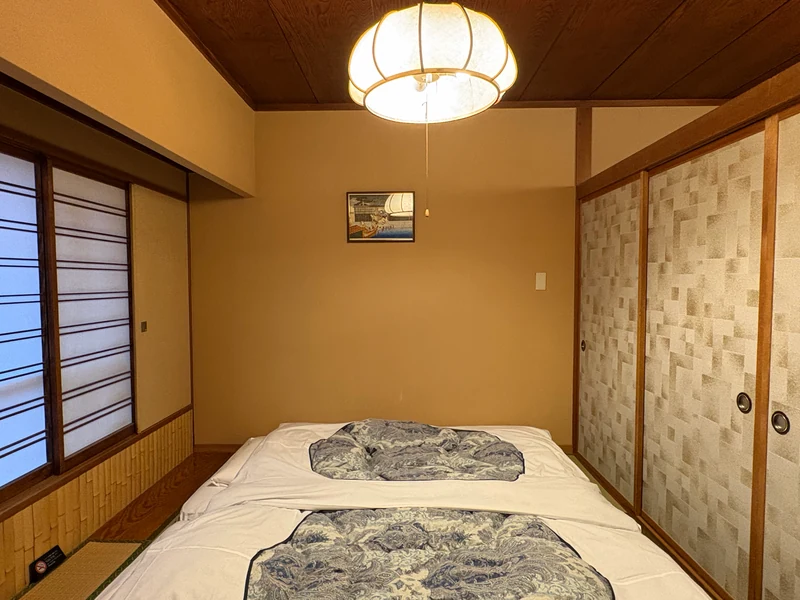
A futon is not a sofa bed. It is a thick cotton mattress laid directly onto the tatami floor, with a duvet on top. In a traditional room there is no bed frame, and during the day the futon is folded away so the room becomes a living space again.
It is firmer than a Western mattress. The first night can feel strange if you are used to a soft bed. By the second night most people stop noticing, and a fair number tell us on the way out that they slept better than they had all trip.
Two things worth knowing. You sleep low, close to the floor, which some travellers with knee or back problems find hard to get up from. And tatami has a smell, a dry grass smell, which is part of the experience rather than a sign that something needs cleaning.
The bath, explained properly
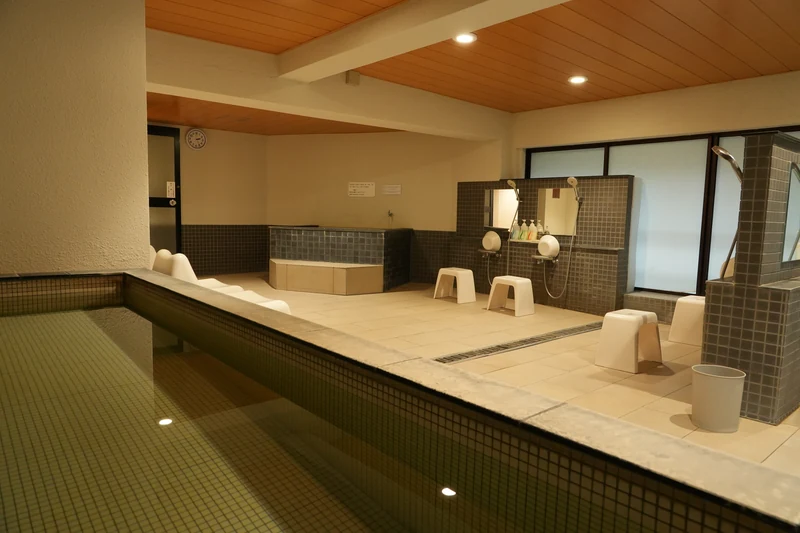
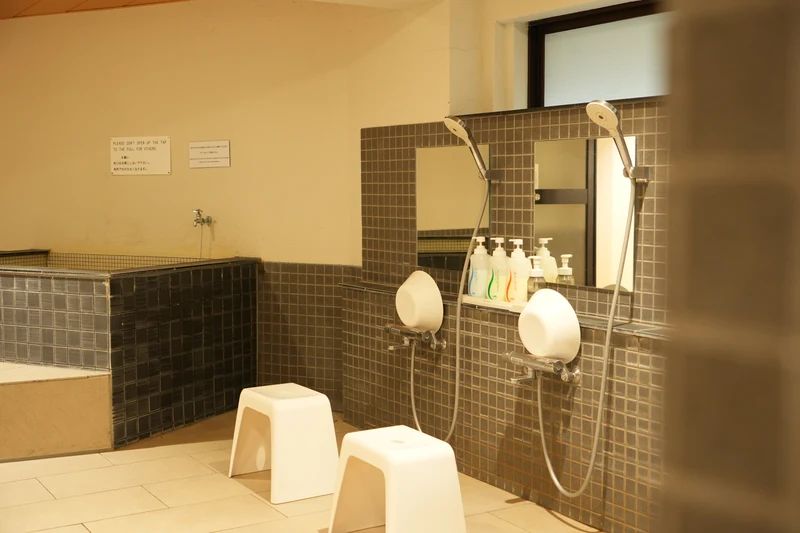
This is where most first-time visitors are nervous, and where the rules are simplest once you know them. A Japanese bath is for soaking, not for washing. You arrive at the tub already clean.
- 1
- Undress completely in the changing room. Swimwear is not worn. Leave your clothes in a basket or locker
- 2
- Take only the small towel with you into the bathing area
- 3
- Sit at one of the shower stations. Wash your whole body and rinse off every trace of soap
- 4
- Now enter the tub, slowly. Soak. Do not swim, and do not put your head under
- 5
- Keep the small towel out of the water. Fold it and rest it on your head or the edge
- 6
- Dry yourself roughly before returning to the changing room
Baths at Hotel Edoya are separated by gender and are on the sixth floor, which means that when you look up from the water there is nothing above you but sky. The building sits on top of a hill, and the bath sits on top of the building.
The baths are available from 15:00 until 10:00 the following morning. Bring the towels provided in your room, and follow the guidance posted in the bathing area.
Shoes, slippers and the invisible line
Japanese buildings are divided into places where shoes belong and places where they do not. The boundary is usually marked by a step, or by the floor changing material. That step is the line.
- ・ Shoes off before stepping onto tatami. Always. Socks are fine
- ・ Slippers are for corridors and hard floors, not for tatami
- ・ Toilet slippers stay in the toilet. Walking out still wearing them is the classic mistake, and everyone will be too polite to tell you
The yukata
A yukata is the light cotton robe left in your room. It is not a bathrobe and not pyjamas, though it works as both.
Fold the left side over the right. This matters. The other way round is how the dead are dressed for burial, and while nobody will say anything, they will notice. Tie the sash at the waist, not the hips.
Inside the building you can wear it anywhere. To the bath, to the lobby, to breakfast. That is normal and expected.
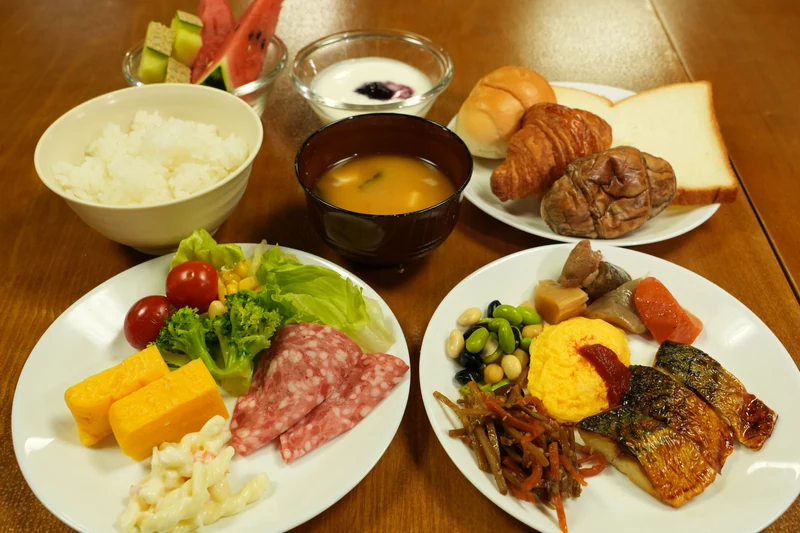
Breakfast, and what is included
Breakfast is included for hotel guests and is served as a Japanese and Western buffet at Kosetsu on the basement floor. Breakfast hours are 7:00 to 9:30, with last admission at 9:15.
Choices include rice, miso soup, fish and eggs, as well as bread, yogurt and fruit. The selection changes from day to day.
What this inn is, and what it is not
We should be straightforward about this, because the wrong expectation ruins a stay that would otherwise be good.
Hotel Edoya opened in 1967. The building is not new. The bathrooms inside the guest rooms are not modern, and if you are looking for a recently built hotel with a designer bathroom, you will be happier somewhere else. Our guests tell us this in their reviews and they are right.
What we have instead is tatami, an open-air bath on the roof with the sky above it, a quiet street on a hill, and staff who have been doing this for a long time. If you read our reviews, the pattern is consistent: people write warmly about the people and the bath, and honestly about the plumbing.
We would rather you knew both before you booked.
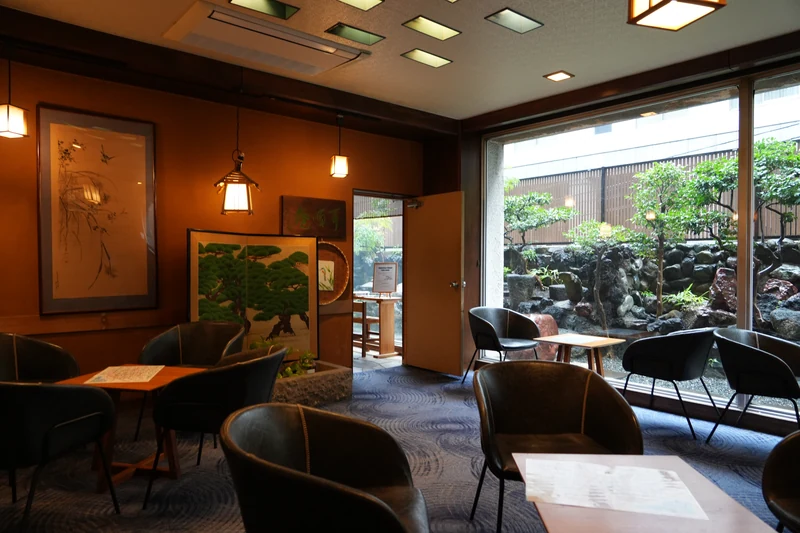
Where you actually are
Yushima is a residential district of narrow streets and short hills, sitting between Ueno and Akihabara. It is not a tourist quarter, which is the point. You can walk to the sights and then come back to somewhere quiet.
In a Japanese-style room, yes. A futon is laid on the tatami. It is firmer than a Western bed and sits low to the ground. Some economy rooms have beds, but the official room guide states that Japanese or Western room style cannot be selected for this category. Please contact the hotel if a bed is essential.
No. Japanese baths are used without clothing, and baths are separated by gender. Only the small towel comes in with you, and it stays out of the water.
Yes. Hotel guests receive a Japanese and Western breakfast buffet at Kosetsu on the basement floor. It runs from 7:00 to 9:30, with last admission at 9:15.
About five minutes on foot from Yushima Station on the Tokyo Metro Chiyoda Line. The final stretch is uphill, which is worth knowing if you are carrying heavy luggage.
Our front desk is used to receiving guests from overseas and has been doing so since 1967. Communication works, and guests write about the staff warmly in their reviews.
- Yushima Tenjin Shrine founding tradition (458 AD, Emperor Yuryaku year 2) and the enshrinement of Sugawara no Michizane in 1355. Bunkyo City official information
- Kyu-Iwasaki-tei Gardens, built 1896 as the residence of Iwasaki Hisaya, designed by Josiah Conder, designated an Important Cultural Property. Tokyo Metropolitan Park Association
- Hotel Edoya opened in 1967 and operates as a government-registered international tourist inn. Hotel Edoya official site
- Approximate walking times from Hotel Edoya at 3-20-3 Yushima, Bunkyo-ku, Tokyo. Allow more time depending on your route and pace.
- Bathing etiquette described here is the standard practice at Japanese public baths and applies broadly across the country
- Breakfast service and hours, verified 9 September 2026. Hotel Edoya breakfast
- Bath hours and towels. Hotel Edoya baths
- Room categories and bed availability. Hotel Edoya rooms
Five minutes from Yushima Station, walking distance to Ueno and Akihabara.